Multi-generational Living: Is It Time to Rethink the Family Home?
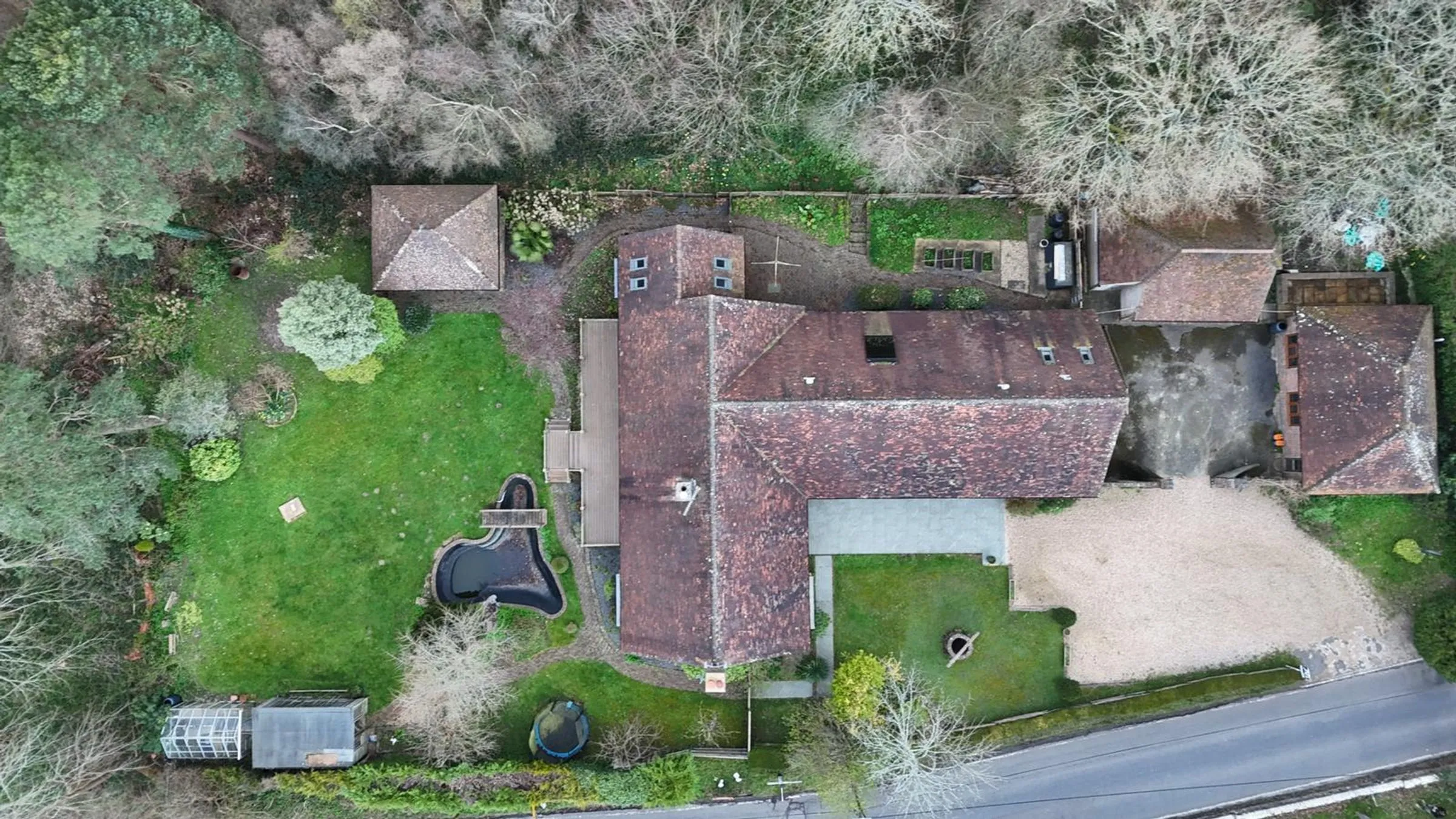
The idea of several generations of a family living under one roof is by no means a new one, but recent figures give us reason to reconsider its relevance to today's property market.
Figures published by the Office for National Statistics in April 2026 revealed that 28.7% of adults aged between 20 and 34 were living with their parents in 2025, compared with an estimated 25.4% a decade earlier. Research published by the Institute for Fiscal Studies in 2025 also estimated that those aged between 25 and 34 living at home would otherwise be paying an average of around £6,700 a year in private rent. For those looking to get onto the property ladder, the potential benefits of remaining at home are quite considerable.
However, there is another side to multigenerational living that is particularly relevant to us here in Rother.
As of 2025, 33.2% of the district's population were aged 65 or over, making Rother home to the second-highest proportion of older residents amongst England's lower-tier local authorities. The district also had the joint highest proportion of residents aged 85 and over, at 5%.
Interestingly, research published by Zoopla in November 2026 found that 64% of homeowners surveyed, aged between 35 and 65 with an older, property-owning parent, had helped maintain or manage their parent's property over the previous year. Almost half had never discussed whether their parent's current home would continue to meet their needs in the future.
It raises the question of whether, for some families, maintaining two separate properties is the most practical arrangement in the longer term.
Looking at buyer preferences, Rightmove's 2025 annual review revealed that 'annexe' was the second most popular term amongst buyers using its keyword search tool, second only to 'garage' and ahead of 'garden'. Whilst we cannot attribute this entirely to multigenerational living, it is interesting to see additional living accommodation rank so highly amongst prospective buyers.
What does this mean from a property perspective?
One of the more interesting aspects of multigenerational living is how it can change the purchasing power of a family. By combining the equity held in two existing properties, some families may find themselves in a position to consider homes that would otherwise have been beyond their individual budgets.
Of course, there are further considerations when purchasing a property jointly with family members, particularly regarding ownership and what would happen should one party wish to sell their share in the future. These are conversations worth having with a solicitor before committing to a purchase.
When it comes to the property search itself, the number of bedrooms can be somewhat misleading. A four-bedroom house with a self-contained annexe may be far better suited to a family spanning several generations than a conventional six-bedroom property.
This is something worth bearing in mind when browsing property portals. Being too restrictive with search filters could mean overlooking some particularly suitable homes, especially as properties with adaptable accommodation aren't always marketed specifically for multigenerational living.
Across this part of East Sussex, older country properties with converted outbuildings can present some interesting opportunities. Equally, a more conventional property within Battle itself, with a ground-floor bedroom and bathroom, may be perfectly sufficient for an older relative who is happy to share the main living areas of the house.
For someone who no longer drives, being within walking distance of the High Street may prove considerably more valuable than having an entirely self-contained living space in a rural location.
An annexe doesn't necessarily mean a second property
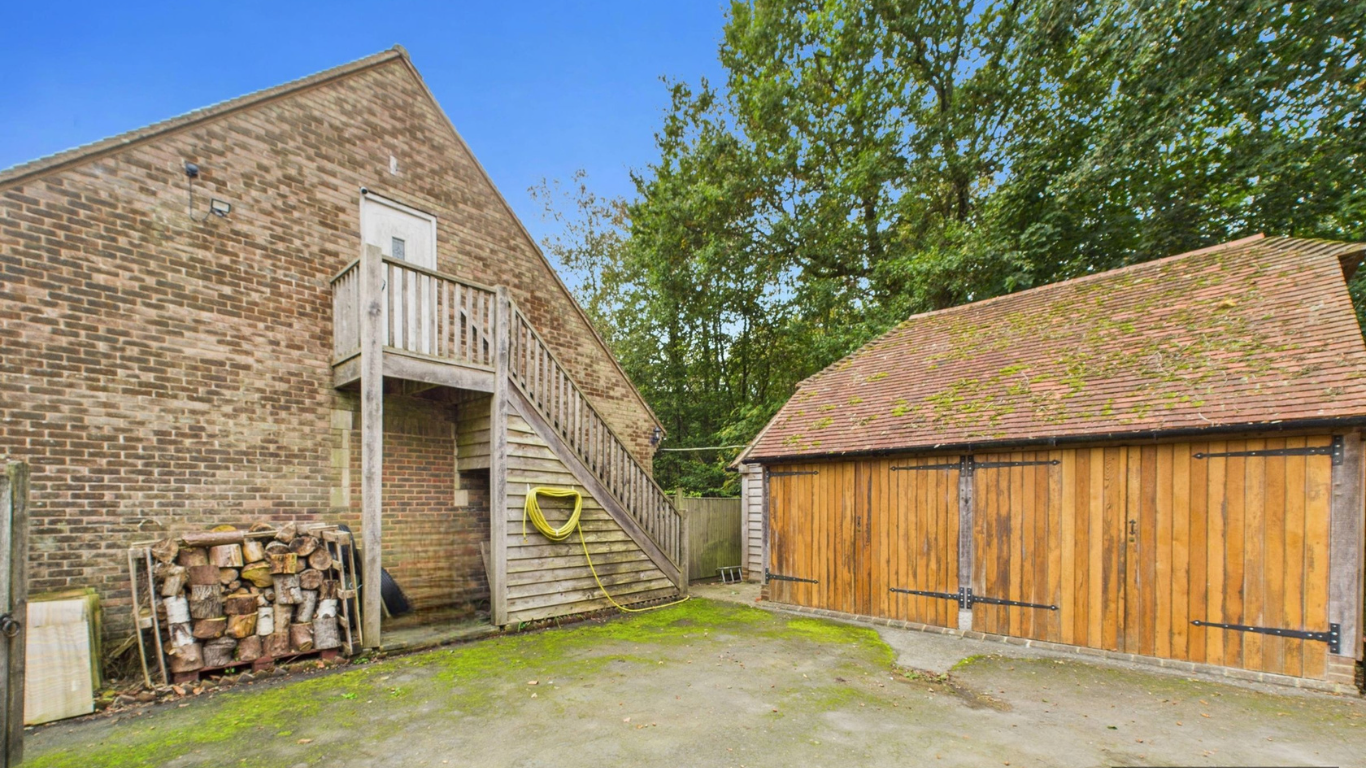
Something that is perhaps less widely understood is the distinction between an annexe and an independent dwelling. Although an annexe may have its own kitchen and entrance, this does not automatically mean it can be rented out or sold separately from the main house.
There may be conditions attached to the original planning permission restricting how the accommodation can be occupied. This is particularly important for buyers who envisage using the annexe to generate a rental income once it is no longer required by a family member.
Similarly, those considering converting an existing garage or outbuilding should not assume that planning permission will be straightforward. Whether permission is required will depend on the nature of the conversion and how the accommodation is intended to be used.
This is also relevant from a valuation perspective. There is a distinction between a property with established, authorised additional living accommodation and one that simply has the potential to provide it.
Note: For those purchasing a property with an existing annexe, it is worth asking to see the original planning permission and any conditions attached to it before proceeding with the purchase.
The financial implications of an annexe
Another consideration that may not immediately come to mind is Council Tax. Depending on the nature of the accommodation, an annexe may be assessed separately from the main property and have its own Council Tax band.
However, Rother District Council offers a 50% discount on qualifying annexes occupied by relatives of those living in the main house, or used as part of the main family home.
In certain circumstances, including where the annexe is occupied by a qualifying relative aged 65 or over, it may be exempt from Council Tax altogether.
For families weighing up the financial implications of maintaining two separate properties against purchasing one larger home, this is certainly something worth looking into.
What about those looking to sell?
From an estate agency perspective, it is worth considering how a property's existing features might appeal to a wider demographic of buyers.
A downstairs bedroom with an adjoining bathroom, for instance, may not be something the current homeowner places much significance on. To a buyer looking to accommodate an elderly parent, however, it could be one of the most desirable features of the property.
The same could be said for a converted outbuilding that is currently used as a home office but has the potential, subject to the relevant permissions, to serve a different purpose.
Given how highly 'annexe' ranked in Rightmove's keyword searches, the terminology used when marketing these properties is also worth some consideration. A buyer specifically searching for an annexe could quite easily overlook a suitable property if its additional accommodation has been poorly described or given little prominence in the listing.
Whilst demographic figures alone cannot tell us how demand for multigenerational properties will develop locally, the age profile of Rother's population, coupled with national buyer preferences, makes it a particularly interesting area of the property market to follow.
If you own a property with an annexe and are curious about its value in the current market, please feel free to get in touch with us.
Office: 01424 772 954
Email: info@ashtonstripp.co.uk